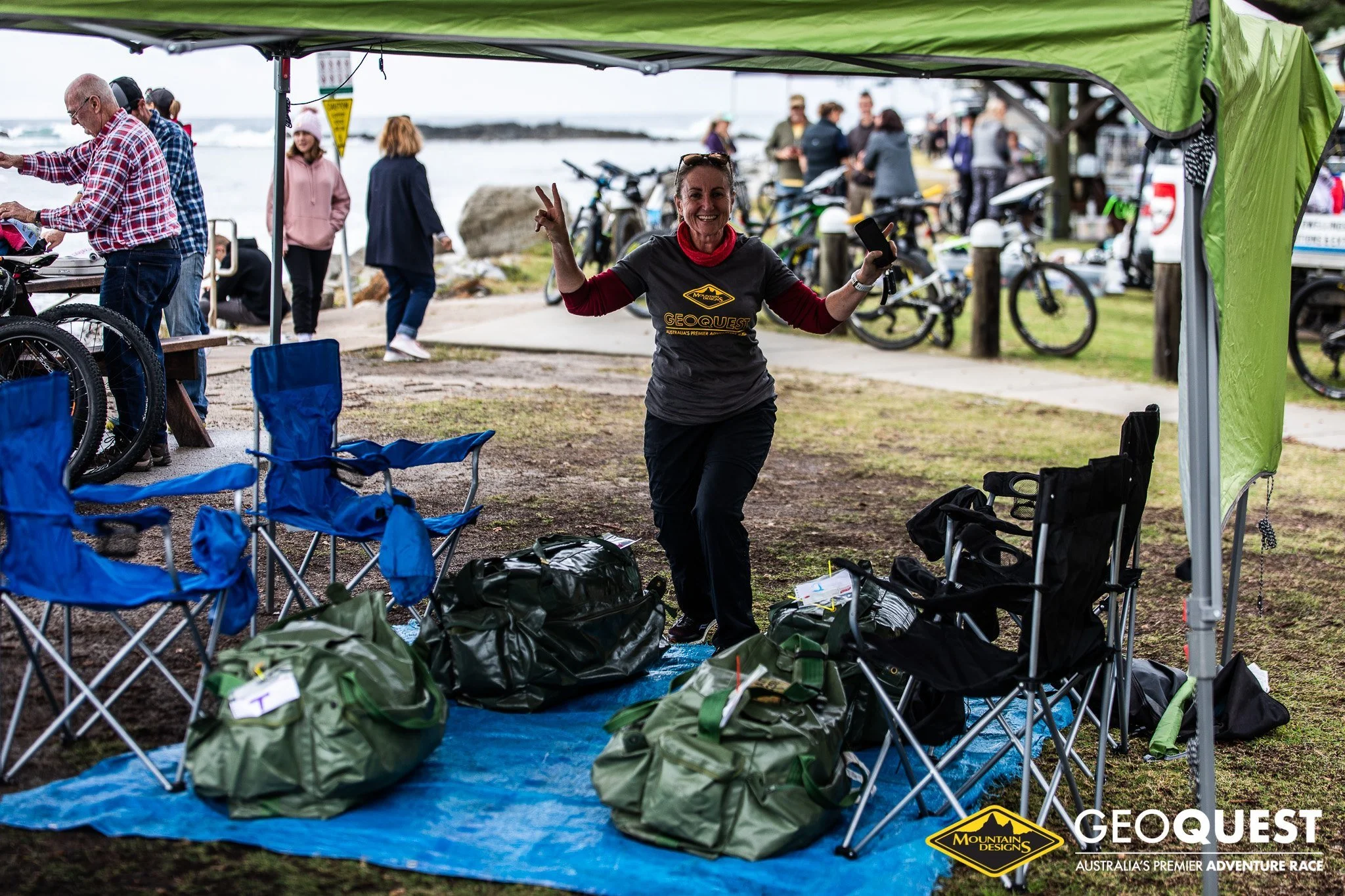
Support Crews at GeoQuest
GeoQuest is unique within the Wild&Co calendar as the only supported adventure race. This page explains how support crews work at GeoQuest and what’s involved for teams choosing to race supported. Teams racing with a support crew do not require gear boxes, bike boxes or paddle bags — all equipment is managed directly by their support crew.
In recent years, many teams’ support crews have grown beyond a single helper — with partners, parents, kids, and even grandparents coming along to be part of the adventure. With GeoQuest held in spectacular locations, support crews get to enjoy the atmosphere, the community, and the destination, even if they’re not racing.
Support crews are also part of the event experience, with random draw prizes and event t-shirts, and plenty of shared downtime with other crews along the course.
That said, being support crew is not just a holiday. Expect little sleep, long waits between checkpoints, and periods of high responsibility. If you’re bringing children or are concerned about fatigue, we strongly recommend having multiple adults sharing support duties so you can rotate rest and responsibilities.
Supported vs Unsupported Racing
GeoQuest offers two race formats:
Supported – Teams bring one designated support crew member (not racing) who is responsible for moving equipment, assisting at transition areas, and supporting the team throughout the race.
Unsupported – Teams race without their own support crew. The GeoQuest logistics team manages all equipment transport and transitions on your behalf, for an additional fee.
Both formats race the same course — the difference is simply who manages the logistics.
Support Crew Requirements
Each supported team must nominate at least one support crew member.
Support crews are responsible for moving the team’s equipment to pre-positioned areas on the course and may provide limited assistance to teams only at designated Transition Areas or Race HQ.
Event volunteers will be available to assist with lifting boats, bikes, or heavy equipment if required.
Support Crews Will Be Required To
Deliver and retrieve team equipment (including boats and bikes) to Transition Areas
Assist the team at designated Transition Areas as permitted
Be prepared to collect the team if they withdraw from the race
Keep all team equipment safe and secure when not in use
Transport the team home after the race
Additional Tips for Support Crews
Bring a tablet or laptop to follow your team via live tracking
Register your phone number with Race HQ so you can be contacted if needed
Plan food and hydration with your team before the race
Assist with minor issues such as blisters, scratches, and fatigue
Keep an eye on your team’s physical and mental condition
Remind them of mandatory equipment requirements
Provide encouragement when things get tough
Help fellow support crews if they run into trouble
Be at the finish line to cheer your team home
Support Crews Are Not Allowed To
Assist teams outside designated Transition Areas or Race HQ
Provide any assistance that gives an unfair advantage on course
Further rules relating to support crews can be found on the Rules Page.
Vehicles & Transport
You do not need a 4WD vehicle to act as a support crew.
You may need the ability to move your entire team and all of their equipment at certain stages of the race. If your vehicle cannot do this in one trip, it is generally possible to shuttle equipment and team members.
Final Word
Support crews are a crucial element of GeoQuest. A good support crew can make an enormous difference to a team’s race — and teams will remember that support long after the finish line.
While it can be demanding, it’s also a highly social and rewarding experience. With many crews sharing the same journey, expect long conversations, shared stories, and a strong sense of community alongside the challenge.